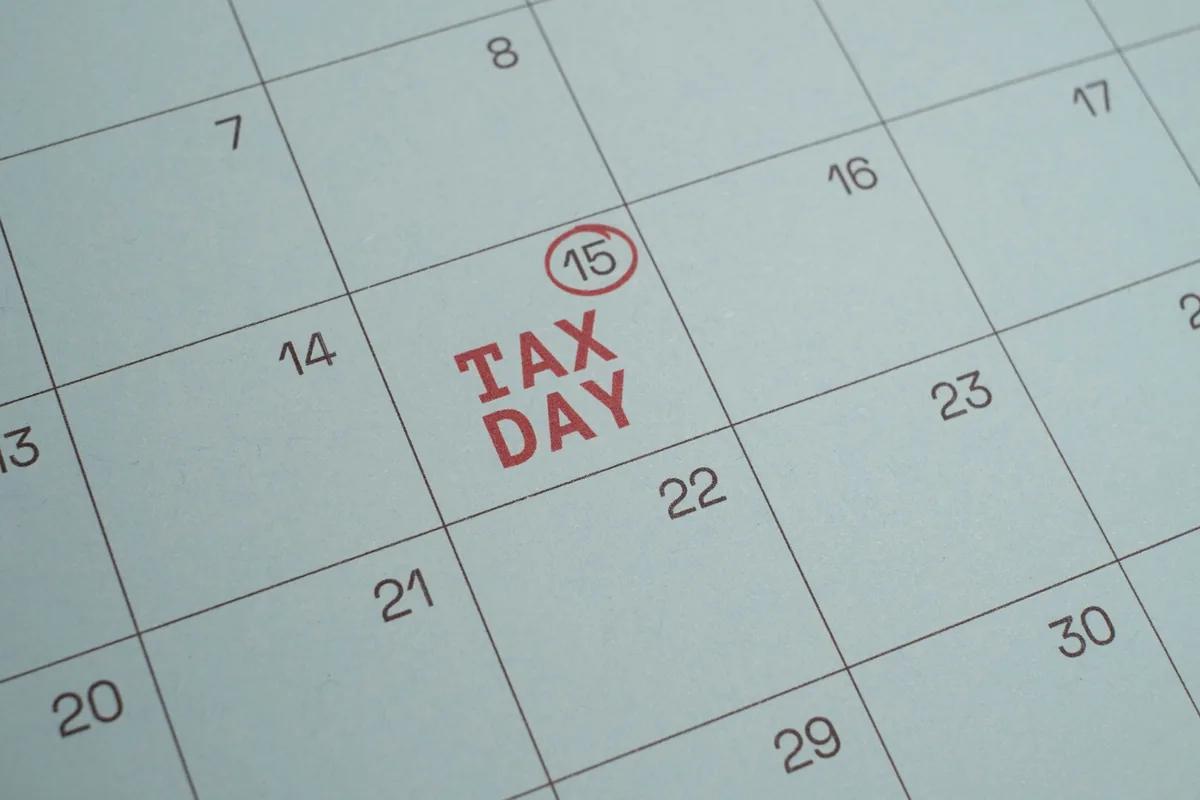
International VAT Refund
An international VAT refund lets your business recover the foreign VAT it paid in France and across the EU — and win back the claims that were rejected. From strategy to filing and, where necessary, litigation, every international VAT refund file is handled personally by a Paris-admitted tax lawyer holding a PhD in international tax law.
- 5 % to 27 % of your foreign spend is potentially recoverable — VAT is not a cost for a taxable business.
- Both legal routes covered: Directive 2008/9/EC (EU businesses) and the 13th Directive 86/560/EEC (non-EU businesses).
- Rejected claim? We handle administrative appeals and litigation before the French administrative courts — a service no automated recovery provider can offer.
Every year, businesses write off hundreds of millions of euros of recoverable foreign VAT — not because the law refuses the international VAT refund, but because nobody filed on time, or filed correctly. If your company attended a trade fair in Paris, moved goods through Rotterdam, paid French import VAT, hired equipment in Germany or sent engineers to a site in Spain, the VAT on those invoices was almost certainly not meant to be your cost. It was meant to be refunded to you.
An international VAT refund is a legal claim — with absolute deadlines
The problem is that an international VAT refund is not an accounting formality; it is a legal claim governed by EU directives, national implementing rules and a body of Court of Justice case law. The deadlines are absolute: miss 30 September for an EU claim, or 30 June for a 13th Directive claim in France, and the right is extinguished — the Court of Justice confirmed in Elsacom (C-294/11) that this is a limitation period, not a target. Tax authorities routinely refuse claims for a missing invoice reference, a mis-stated expense code, an activity that in fact required local VAT registration, or a supplier who charged VAT that should never have been charged. And when the refusal letter arrives, a recovery agency can only shrug: it has no standing to litigate.
That is where a lawyer changes the outcome. Cabinet Nicolas Avocat structures, files and defends cross-border VAT refund claims for EU and non-EU companies — and, critically, takes over rejected files: contentious claims, appeals, and proceedings before the French administrative courts. This page is the complete legal guide to international VAT recovery: who can reclaim foreign VAT, which expenses qualify, the exact deadlines, the French procedure, and what to do when your VAT refund claim is rejected.
What is an international VAT refund?
An international VAT refund is the repayment, by a foreign tax authority, of value added tax that your business paid in a country where it is not established and where it is not required to file VAT returns. Because you have no local VAT return in which to deduct that input tax, EU law provides a substitute mechanism: a direct refund claim addressed to the State of refund.
The idea is structural. VAT is designed to be neutral for taxable persons: the tax burden should fall on the final consumer, not on businesses in the chain. When a Dutch company pays French VAT on a consultancy invoice from a Paris adviser, or a US corporation pays 20 % French VAT on exhibition space at a Paris trade show, that VAT is an input tax — and neutrality requires that it be given back.
The right to deduct is set out in Article 168 of Council Directive 2006/112/EC (the VAT Directive). Article 170 extends that right, in the form of a refund, to taxable persons not established in the Member State where the VAT was incurred. Article 171 then designates the applicable procedure: Directive 2008/9/EC for taxable persons established in another Member State, and the Thirteenth Directive 86/560/EEC for taxable persons established outside the European Union.
So what is a VAT refund in practical terms? It is a cash recovery. For a mid-sized company with €800,000 of annual EU travel, logistics, event and supplier spend at an average 20 % rate, a properly managed foreign VAT refund programme is a six-figure cash-flow item — money that is currently sitting in someone else’s treasury.
Refund or VAT registration? The first legal question
Before any filing, one question must be answered: should your company be registered for VAT in the country concerned? The refund procedure is only open to businesses that made no taxable supplies in the State of refund during the claim period (subject to limited exceptions such as reverse-charge supplies, exempt transport and certain OSS transactions). If your company in fact carried out local taxable operations — installation work, local sales of goods, B2C services, use of a warehouse triggering a domestic supply — the correct route is registration and deduction through a local VAT return. Filing a refund claim instead is the single most common cause of an overseas VAT refund being refused in full, and it can also expose the company to a late-registration assessment. This assessment is a legal analysis, not a data-entry task.
The two legal routes: Directive 2008/9/EC and the 13th Directive
Route 1 — EU businesses: Directive 2008/9/EC (the “8th Directive” procedure)
A business established in an EU Member State that incurred VAT in another Member State claims under Council Directive 2008/9/EC. Practitioners still call it the 8th VAT Directive procedure, after the repealed Directive 79/1072/EEC it replaced. Its defining features:
- One electronic portal, your own country. You file through the EU VAT refund portal of your Member State of establishment — for a French company, the secure professional account on impots.gouv.fr. That State performs basic checks and transmits the claim to the State of refund (Articles 7 and 15).
- No fiscal representative required within the EU.
- Harmonised content: the claim identifies each invoice, the supplier’s VAT number, the taxable amount, the VAT amount, the deductible proportion and a standard expense code from 1 to 10 (Article 9): 1 fuel, 2 hire of means of transport, 3 expenditure relating to means of transport, 4 road tolls and user charges, 5 travel expenses, 6 accommodation, 7 food, drink and restaurant services, 8 admissions to fairs and exhibitions, 9 expenditure on luxuries, amusements and entertainment, 10 other. Sub-codes are required by several Member States. Wrong coding = automated rejection.
- Double condition (Article 6). The VAT must be deductible in principle in the State of refund and you may only claim to the extent of your right of deduction in your own State (your pro rata). A partly exempt claimant — a bank, an insurer, a healthcare group — recovers only its recovery percentage. This is a frequent and expensive oversight.
- Decision deadline: four months from receipt; extended to six or, where further information is requested, up to eight months (Articles 19–21). Late payment triggers interest (Articles 26–27).
Route 2 — Non-EU businesses: the 13th Directive 86/560/EEC
A business established outside the EU — United States, United Kingdom (post-Brexit), Switzerland, Canada, Australia, Japan, UAE, Singapore — claims under the Thirteenth Council Directive 86/560/EEC. This is a far less harmonised regime, and the differences matter:
- Direct filing with each State of refund, in the local language, under local form and format rules. There is no single EU portal.
- Reciprocity (Article 2(2)). Member States may condition the refund on the third country granting comparable treatment. France does not apply a general reciprocity requirement, which is a major structural advantage. Other Member States — Spain and Italy in particular — restrict refunds to a short list of third countries; Germany applies reciprocity and excludes certain categories such as VAT on fuel for some claimants. Consequence: a US or Australian company may be fully refundable in France and barred in Spain for identical expenses.
The mandatory French fiscal representative
- Tax representative (Article 2(3)). Member States may require the appointment of a local representative — and France does: a non-EU claimant must appoint a fiscal representative established in France, itself a French taxable person, accredited by the French tax administration (Articles 242-0 Z quater to 242-0 Z decies of Annex II to the French Tax Code). Since 1 July 2021 the claim is filed electronically, but it is the accredited representative who files it, through the secure messaging of its own professional account on impots.gouv.fr. Filing without a duly appointed representative is a ground for outright rejection.
- Shorter deadline in France: 30 June of the year following the refund period (see below).
The two international VAT refund routes compared
| Criterion | EU businesses — Directive 2008/9/EC | Non-EU businesses — 13th Directive 86/560/EEC |
|---|---|---|
| Where you file | Electronic portal of your own Member State | Directly with each State of refund (France: dedicated non-resident service) |
| Filing deadline | 30 September of year N+1 (Art. 15) | France: 30 June of year N+1 — varies by Member State |
| Language | Language(s) accepted by the State of refund | Local language, usually mandatory (French for France) |
| Reciprocity condition | No | Possible — Member State option (not applied by France) |
| Tax representative | Not required | Member State option — mandatory in France (accredited representative, Annex II CGI, art. 242-0 Z quater et seq.) |
| Original invoices | Generally copies/scans above thresholds | Often originals or certified copies |
| Certificate of taxable status | Not required (portal validates status) | Required — issued by home tax authority (e.g. IRS Form 6166 for the US) |
| Minimum amounts (France) | €400 (period < 1 year, ≥ 3 months) / €50 (calendar year) | €400 / €50 — same thresholds applied |
Eligibility: who can claim a VAT refund — and who cannot
Who can claim
Can a foreign company claim a VAT refund? Yes, provided four cumulative conditions are met during the refund period:
- Taxable person status. You carry on an economic activity and are registered for VAT (or an equivalent turnover tax) in your country of establishment. Non-taxable holding companies, purely exempt bodies and non-registered entities are excluded.
- No establishment in the State of refund. No seat, no fixed establishment, no domicile or habitual residence there. A branch, an office with human and technical resources, or a dependent agent can defeat the claim — and the concept of “fixed establishment” is one of the most litigated notions in EU VAT.
- No taxable supplies in the State of refund during the period, save the statutory exceptions (transport and ancillary exempt services, supplies where VAT is due by the customer under reverse charge, certain OSS-declared supplies).
- Right of deduction. The expenditure must be used for taxable business activities that would confer a right of deduction, both under the rules of the State of refund and within the limits of your own deduction right.
Who cannot claim VAT back
- Private individuals (except the separate retail-export scheme for travellers — see below).
- Businesses fully exempt without right of deduction, and, proportionally, partly exempt businesses.
- Companies that should have registered locally — refund route closed.
- Claimants presenting VAT that was not legally due: where a supplier wrongly charged VAT (e.g. a B2B service that should have been reverse-charged, or an intra-EU supply invoiced with VAT), the tax authority will refuse. The remedy is not a refund claim but a corrected invoice and credit note from the supplier. Recovering that money is a contractual and often litigious exercise.
- Small-scheme businesses whose domestic regime excludes deduction, and flat-rate farmers, under Article 4 of Directive 2008/9/EC.
Which expenses qualify for a VAT refund — and which are excluded
The scope of recovery is decided by the State of refund. This is the single most misunderstood point in cross-border VAT recovery: an expense fully deductible in the Netherlands may be blocked in France, and vice versa. Moreover, getting this mapping right at the outset is what separates a smooth international VAT refund from a rejected one. The table below sets out French treatment, with the most relevant divergences flagged.
French treatment, category by category
| Expense category | France (State of refund) | Practical notes |
|---|---|---|
| Trade fairs, exhibitions, congress fees, stand construction | Recoverable | The classic claim for US, UK and Asian exhibitors in Paris and Lyon. |
| Professional services (lawyers, consultants, agencies, translators) | Recoverable | Check first whether the service should have been reverse-charged to you. |
| Import VAT on goods released into free circulation | Recoverable | Requires the customs declaration and proof the claimant is the owner/importer entitled to deduct. |
| Restaurant and catering | Recoverable | Blocked or restricted in several other Member States. |
Excluded, restricted and special categories
| Expense category | France (State of refund) | Practical notes |
|---|---|---|
| Hotel accommodation for the claimant’s own staff and directors | Excluded in France | Recoverable if the accommodation is provided to third parties (e.g. clients) in a business context. Frequent rejection ground. |
| Passenger transport (air, rail, taxi, ride-hailing) | Excluded in France | A structural exclusion, not a documentary problem. |
| Purchase / lease of passenger cars | Excluded | Commercial vehicles (2-seat vans, trucks) are recoverable. |
| Fuel — passenger vehicles | Partially (80 % on petrol and diesel for passenger cars) | 100 % for qualifying commercial vehicles. Rules have changed over time: apply the rate in force for the period claimed. |
| Road tolls, parking, vehicle repairs | Recoverable | Tolls (code 4) are among the easiest wins for hauliers. |
| Fuel, tooling and consumables for site works | Recoverable | But verify no local VAT registration obligation arose from the works. |
| Marketing gifts | Recoverable up to €73 incl. VAT per beneficiary per year (all gifts and distribution costs aggregated); all-or-nothing above | Threshold updated periodically by ministerial order. |
| Entertainment, luxuries, amusements (code 9) | Generally excluded | Narrow business-purpose exceptions. |
| Telecom, IT subscriptions, cloud services | Recoverable | Usually should be reverse-charged — check before claiming. |
A well-built claim is filtered before filing. Including a batch of structurally non-refundable items (air tickets, staff hotels, car rental) does more than waste effort: it signals a poorly controlled file, invites a full documentary audit under Article 20, and delays payment of the recoverable part by months. Precision is a cash-flow strategy.
International VAT refund deadlines and minimum amounts
In Elsacom NV (C-294/11), the Court of Justice held that the 30 September deadline is a mandatory limitation period: a claim filed on 1 October is time-barred, whatever its merits, whatever the amount, however good the excuse. There is no equitable relief. If you are reading this in September, act now.
| Claimant / State | Refund period | Filing deadline |
|---|---|---|
| EU business claiming in any Member State (Directive 2008/9/EC) | Calendar year 2025, or quarter/period of at least 3 months | 30 September 2026 |
| Non-EU business claiming French VAT (13th Directive) | Calendar year 2025 (or quarter) | 30 June 2026 |
| Non-EU business claiming in other Member States | Varies | 30 June or 30 September depending on the State — verify individually |
| EU business claiming UK VAT (post-Brexit, HMRC overseas scheme) | Prescribed year 1 July – 30 June | 31 December following the end of the prescribed year |
| Response to an authority’s request for information (Art. 20 Dir. 2008/9) | — | 1 month from receipt |
Minimum amounts (EU harmonised, Article 17)
- €400 (or national equivalent) where the claim covers a period of at least three months but less than a calendar year;
- €50 where the claim covers a calendar year or the remainder of a calendar year.
Answering the common question “how much do you need to spend to get a VAT refund“: in France, roughly €250 of VAT-bearing spend at 20 % produces €50 of VAT — the annual threshold. Small claims are therefore viable, provided you aggregate them into a single annual filing.
The one-month trap
The Article 20 information request is where most files are lost. Miss the one-month window and you receive a rejection. The good news — and it is decisive — is that in Sea Chefs Cruise Services (C-133/18) the Court of Justice ruled that this one-month period is not a preclusive time limit, so a claimant may produce the missing evidence for the first time in an appeal against the refusal. In Auto Service Leasing (C-294/20) the Court framed the limits of that principle. In other words: a rejection for late documents is very often reversible — but only through a properly framed legal remedy.
Documents required for a VAT refund
What documents are needed for a VAT refund? For any international VAT refund, the core file comprises:
- Compliant purchase invoices, issued in the claimant’s exact legal name and address, showing the supplier’s full identity and VAT number, an invoice number and date, a sufficient description of the goods or services, the taxable base per rate, the VAT rate and the VAT amount (Articles 226 and 178 of Directive 2006/112/EC). Pro forma documents, statements of account, credit-card slips and till receipts without VAT details are systematically refused.
- Import documents for import VAT: the customs declaration and, where relevant, evidence of payment and of the claimant’s status as owner of the goods.
- Certificate of taxable status for 13th Directive claimants — an official confirmation from the home tax administration that the claimant is a taxable person carrying on an economic activity (US claimants: IRS Form 6166; UK: HMRC certificate of status VAT66A). Validity is limited in time.
Mandates, bank details and supporting evidence
- Power of attorney / mandate where a lawyer or representative files on your behalf.
- Bank details (IBAN/BIC or, for non-EU accounts, full correspondent-bank data) in the claimant’s name — third-party accounts are refused.
- Description of business activity and, where requested, contracts, event registrations or transport documents proving the business purpose.
- Scans or originals: EU claims are filed electronically, with scanned invoices required above thresholds set by each State of refund; 13th Directive claims in France historically required original invoices and the practice on certified copies must be confirmed for each filing cycle.
Where an invoice is formally imperfect but the substantive conditions of deduction are met, EU case law limits the authorities’ power to refuse: Barlis 06 (C-516/14) on insufficient descriptions, Senatex (C-518/14) on retroactive correction, Volkswagen AG (C-533/16) on time limits running from the moment the right can actually be exercised. A VAT refund invoice correction strategy — obtaining rectified invoices and invoking proportionality — often saves a claim that a recovery agency would have written off.
The international VAT refund procedure, step by step
- Exposure mapping. Identify every country where VAT was borne, per period and per expense code, over the last two open years.
- Legal qualification. Confirm the absence of a fixed establishment and of local taxable supplies; determine whether registration is required instead of a refund; check for VAT wrongly charged by suppliers.
- Filtering and coding. Apply the deduction rules of each State of refund, your own pro rata, and the correct codes 1–10 with sub-codes.
- File assembly. Invoices, certificate of status, mandate, bank data, activity description; rectification of defective invoices before filing.
- Filing. EU claimants: home-State portal. Non-EU claimants: direct filing with each State of refund, in the local language and format.
- Managing the enquiry. Structured, argued responses to Article 20 requests within one month, with legal reasoning rather than a bare document dump.
- Decision and payment. Full or partial grant, or refusal, within four to eight months; payment normally within ten working days of the decision deadline, with statutory interest if late.
- Remedies. Where the decision is unfavourable: contentious claim and, if necessary, proceedings before the competent administrative court.
Not sure which route applies to your company?
Send us a sample of your foreign invoices and a short description of your activity in France or the EU. We will tell you, in writing, whether you should file a refund claim or register locally, what is recoverable, and by when. Clear scope, fixed engagement — no percentage of your refund. As a result, you know the full cost of your international VAT refund before we start.
Country focus: VAT refund in France for foreign companies
France is one of the highest-value jurisdictions for international VAT recovery: a 20 % standard rate, an enormous trade-fair and congress economy, major logistics gateways, and — for non-EU claimants — no general reciprocity condition. It is also a jurisdiction where formalism is taken seriously, and where an incomplete file is refused rather than corrected.
Which French service handles your claim
Refund claims from businesses not established in France are handled by the non-resident tax administration — the Direction des Impôts des Non-Résidents (DINR) and its dedicated VAT refund service (SR-TVA) — through the secure portal on impots.gouv.fr. EU claimants arrive via their own Member State’s portal; non-EU claimants file under the 13th Directive through their accredited French fiscal representative, who submits the claim electronically from its own professional account. Correspondence, requests for information and decisions are in French, and the reasoning of a French rejection letter is frequently terse: understanding what is actually being objected to is itself a professional skill.
French thresholds and periods
- Annual claim: minimum €50, filed for calendar year N.
- Quarterly or interim claim (period of at least three months): minimum €400.
- EU claimants: deadline 30 September N+1.
- Non-EU claimants: deadline 30 June N+1 — three months earlier. This asymmetry catches out US and UK groups whose finance teams work to the “30 September” figure they read in EU guidance.
Tax representative in France for non-EU claimants
For 13th Directive claims, appointing an accredited representative is not optional in France: a non-EU claimant must designate a fiscal representative established in France, accredited by the tax administration, under a written mandate authorising the representative to carry out the refund formalities in its name (Annex II to the CGI, articles 242-0 Z quater to 242-0 Z decies).
Beyond compliance, a VAT tax representative in France is often decisive in practice: the representative receives and answers the administration’s requests in French, within the deadline, and can escalate. Where the claimant is also required to register for French VAT — because it turns out to make local taxable supplies — the analysis shifts to VAT registration and, for certain operations, fiscal representation. Our firm handles both dimensions; see our dedicated page on the work of a French VAT lawyer and, for registration and representation mandates, our VAT practice for global businesses.
Typical French claims we handle
- US and Canadian corporations exhibiting at Paris trade fairs and congresses (stand, fittings, catering, agency fees).
- UK companies post-Brexit, now filing under the 13th Directive rather than the EU portal — a change many are still mishandling.
- Swiss groups with French supplier, event and site-service costs.
- Dutch and Belgian companies with French logistics, transport and subcontracting costs — where the border between a refund claim and a French registration obligation is thin.
- Import VAT paid at French entry points by non-established owners of goods — a specialised file combining customs and VAT analysis — see our customs law practice for global trade.
French companies reclaiming VAT paid abroad
The flow runs both ways. A French company that paid German, Belgian, Spanish, Italian or Dutch VAT recovers it through the French portal under Directive 2008/9/EC — one single electronic filing per State of refund, submitted through its professional account on impots.gouv.fr by 30 September N+1. The traps are in the destination country’s deduction rules:
- Germany: high volumes of fuel, tolls, hotel and trade-fair VAT. Accommodation and restaurant treatment differs from France; the German authority (BZSt) is exacting on invoice compliance and on the description of the business activity.
- Belgium: restaurant and reception costs are largely blocked; accommodation and event costs are common claim items; be alert to construction and installation works that trigger Belgian registration.
- Spain: generally generous on hotels and restaurants where a business link is proven; strict on documentation and on the NIF details of suppliers.
- Italy: notoriously formalistic; long processing times; some categories restricted and refunds frequently reduced on documentary grounds.
- Netherlands: broad recovery on accommodation, transport and events, with the private-use adjustment (BUA) limiting staff-benefit spend. Our Rotterdam presence gives direct access to Dutch practice and to the Belastingdienst’s expectations.
For French exporters and hauliers, the recurring question — “how can a French company recover VAT paid abroad” — has a simple operational answer: one consolidated annual claim per country, prepared with the deduction rules of that country, filed well before the September deadline, and defended if challenged. See also our French-language practice pages via the firm’s English homepage.
US, UK, Swiss, Canadian and Australian companies: your specific position
VAT refund for US companies
There is no VAT in the United States — US sales tax is a different tax, and there is no mechanism to “refund VAT in the USA”. What a US corporation can do is recover EU VAT as a non-EU company under the 13th Directive. Practical requirements: an IRS Form 6166 certificate of US taxable status, filings in the local language of each State of refund, and country-by-country reciprocity screening (open in France; restricted or excluded in several other Member States). A US company that reclaims French VAT on a Paris trade fair typically recovers 20 % of a very large invoice — one of the highest-yield claims in our practice.
VAT refund for UK companies
Since Brexit, a UK business incurring French or EU VAT is a third-country claimant: the EU portal is closed to it and the 13th Directive applies, with the earlier 30 June deadline in France, local-language filing and an HMRC certificate of status. Conversely, EU businesses reclaiming UK VAT use HMRC’s overseas-business scheme, with the 1 July–30 June prescribed year and a 31 December deadline. Many UK finance teams are still applying pre-Brexit reflexes — and losing claims to the calendar.
VAT refund for Swiss companies
Swiss businesses are among the best-positioned third-country claimants in Europe, benefiting from reciprocal treatment in most Member States and from a business profile (industrial, pharmaceutical, financial, event-driven) that generates substantial recoverable French and German VAT. Watch the interaction with Swiss VAT recovery rights and with any partial-exemption position.
VAT refund for Canadian and Australian companies
GST-registered Canadian and Australian businesses qualify as taxable persons for 13th Directive purposes. France’s open approach makes it the natural entry point for recovering European VAT; other Member States must be screened individually for reciprocity. Certificates of status are issued by the CRA and the ATO respectively.
Rejected VAT refund claims: your rights, your remedies
This is the section that matters most — and the reason clients come to a lawyer rather than a service provider. A rejected international VAT refund claim is not the end of the file. Instead, it is the beginning of a procedure, with its own deadlines and its own case law.
Why VAT refund claims are rejected
- Filed after the deadline (30 September / 30 June). Almost always fatal — but check the exact date of receipt by the authority and, for portal failures, the evidence of timely submission.
- The claimant should have been VAT-registered locally. Requires a reasoned reply on fixed establishment and place of supply — a genuinely legal debate.
- Alleged fixed establishment in the State of refund. Highly arguable, and one of the richest areas of CJEU case law.
- Structurally excluded expenses (French staff accommodation, passenger transport, passenger cars, entertainment).
- Non-compliant invoices: wrong claimant name, missing VAT number, insufficient description. Frequently curable through rectification and proportionality arguments.
- VAT not legally due — invoiced in error by the supplier. The remedy lies against the supplier, and sometimes in a claim for restitution.
- Late or incomplete reply to an Article 20 request — reversible under Sea Chefs.
- Wrong expense codes or inconsistencies between the claim data and the invoices.
- Missing or expired certificate of taxable status.
- Deduction proportion not applied by a partly exempt claimant.
- Silence. An implicit refusal by lapse of the decision period is itself a challengeable decision — and it carries a right to interest.
How to appeal a VAT refund rejection in France
A refusal by the French administration is an administrative decision that can be contested. Depending on the exact legal nature of the decision, the route runs through a contentious claim (réclamation contentieuse) to the tax administration and then through proceedings before the administrative court — in practice the Tribunal administratif de Montreuil, competent for non-resident taxpayers — followed by the Cour administrative d’appel. A further appeal on points of law lies to the Conseil d’État, where French procedure reserves representation to an avocat aux Conseils, a separate and dedicated bar.
However, time limits are short and vary with the nature and notification of the decision: some are counted in two months from notification, others by reference to the general limitation rules of the Livre des procédures fiscales. Do not let a rejection letter sit in an inbox. The first thing we do on a new file is calculate the exact expiry date of your right of action.
What a lawyer actually adds at this stage
- Reframing the legal debate. A rejection usually rests on an unstated legal premise (that there is a fixed establishment, that the expense is excluded, that the formal defect is substantive). Contesting the premise, with directive text and CJEU authority, is what reverses decisions.
- Producing evidence at the right moment and in admissible form, including evidence the authority refused to consider at first instance.
- Invoking neutrality and proportionality — the backbone of the case law protecting substantive rights of deduction against formalism.
- Claiming interest for late payment where the statutory decision periods were exceeded.
- Representation before the Tribunal administratif and the Cour administrative d’appel, with the procedural standing and professional privilege that only a member of the Bar has.
Your VAT refund was refused, reduced or left unanswered?
Send us the decision letter, the claim you filed and the underlying invoices. Within a short review we will tell you whether the refusal is legally sustainable, which remedy applies, and the exact deadline to preserve your rights. We act as your VAT refund lawyer for rejected claims and VAT disputes before the French administration and the administrative courts.
Why a VAT lawyer, not a recovery service
Most search results for “international VAT refund service” lead to recovery agencies. They have real strengths: volume processing, expense-data extraction, dashboards. But their model has a hard limit — the moment a claim becomes contentious, they stop. And their commercial structure creates a conflict of interest: a provider paid a percentage of what it recovers has no economic incentive to tell you that you should be registered for VAT in France, that the refund route is closed to you, or that the right course is to litigate a €40,000 refusal.
| Criterion | Recovery agency / VAT reclaim provider | Cabinet Nicolas Avocat (member of the Paris Bar) |
|---|---|---|
| Preparing and filing claims | Yes | Yes |
| Legal opinion on establishment / registration obligations | No — outside scope | Core work, in writing |
| Contentious claim against a refusal | No | Yes |
| Representation before French administrative courts | Not permitted | Yes — Tribunal administratif and Cour administrative d’appel |
| Legal professional privilege on your file | No | Yes — attorney-client confidentiality |
| Handling a VAT audit triggered by the claim | No | Yes |
| Fee model | Commonly a percentage of the refund | Transparent engagement letter, fixed or time-based; no share of your refund |
| Professional insurance & regulated liability | Variable | Regulated profession, mandatory insurance |
Travellers: VAT refunds for individuals (and why business claims are different)
If you are an individual visitor, you are not in the business refund regime described above. You fall under the retail export scheme: goods bought for personal use and physically carried out of the EU in your baggage may be sold VAT-free, with the VAT refunded after customs validation of the export. In France, your purchases within the same retail brand (or group of brands), made over a maximum of three days, must together be strictly above €100 including VAT; you must be resident outside the EU; and the goods must leave the EU by the end of the third month following purchase, with the export form validated at the point of exit — in France through the PABLO electronic terminals. Refunds are then paid by the operator, less a commission.
Whether it is worth claiming depends on the amount: on a €3,000 luxury purchase, a net refund in the region of 10–13 % is meaningful; on a €120 purchase, the commission and the queue rarely are. Rates matter too — Hungary has the EU’s highest standard rate at 27 %, followed by Denmark, Sweden and Croatia at 25 %.
If you are travelling on business, this is the wrong scheme. Company expenses — hotels, congress fees, supplier invoices, equipment hire — are not covered by the traveller scheme, and airport desks cannot refund them. They must be claimed by the company under Directive 2008/9/EC or the 13th Directive, within the deadlines above. That is the work we do.
International VAT refund FAQ
International VAT refund eligibility and procedure
What is a VAT refund?
A VAT refund is the repayment of value added tax borne by a business in a country where it is not established and files no VAT returns. Claimed across borders, it is called an international VAT refund. Because it cannot deduct that input tax through a local return, EU law grants a direct refund claim under Articles 170–171 of Directive 2006/112/EC, implemented by Directive 2008/9/EC for EU businesses and the 13th Directive for non-EU businesses.
Can a foreign company claim a VAT refund in the EU?
Yes. A company established outside the Member State of refund can reclaim the VAT it paid there, provided it is a taxable person, has no establishment in that State, made no taxable supplies there during the period (subject to statutory exceptions), and the expenditure carries a right of deduction. Non-EU companies claim under the 13th Directive, subject to any reciprocity condition applied by the State concerned.
How do I reclaim foreign VAT paid in another EU country?
File a single electronic claim through the VAT refund portal of your own Member State of establishment. Your tax authority forwards it to the State of refund. Each invoice must be listed with the supplier’s VAT number, the taxable amount, the VAT amount, the deductible proportion and the correct expense code 1 to 10. The deadline is 30 September of the year following the refund period.
What is the EU VAT refund deadline for 2026?
For VAT incurred during 2025, EU businesses must file by 30 September 2026 under Directive 2008/9/EC. Non-EU businesses claiming French VAT must file by 30 June 2026 under the 13th Directive. Both are strict limitation periods: the Court of Justice held in Elsacom (C-294/11) that a late claim is time-barred regardless of its merits.
Deadlines, minimum amounts and timing
What is the minimum amount for an EU VAT refund?
€400 where the claim covers a period of at least three months but less than a calendar year, and €50 where it covers a calendar year or the remainder of one (Article 17 of Directive 2008/9/EC). France applies the same thresholds to 13th Directive claims. In practice, roughly €250 of VAT-bearing spend at 20 % already reaches the €50 annual threshold.
How long does an EU VAT refund take?
The State of refund must decide within four months of receiving the claim, extended to six months if additional information is requested and up to eight months if further information is needed (Articles 19–21 of Directive 2008/9/EC). Payment follows within ten working days. Where those periods are exceeded, statutory interest is due. In practice, well-documented claims are paid in three to six months.
Can a US company reclaim French VAT?
Yes. A US corporation reclaims French VAT under the 13th Directive, filing with the French non-resident tax service by 30 June of the following year, through an accredited French fiscal representative, with an IRS Form 6166 certificate of taxable status and compliant original invoices. France applies no general reciprocity condition, which makes it one of the most favourable Member States for US claimants — unlike Spain or Italy.
Do US citizens pay VAT in Europe, and can Americans get a VAT refund?
Yes, US visitors pay VAT on purchases in Europe. Individuals can recover VAT on goods exported in their personal baggage under the retail export scheme, subject to minimum purchase thresholds, customs validation at departure and a three-month export limit. Business expenses of a US company follow an entirely separate route: a 13th Directive refund claim filed by the company itself.
Documents and country-specific questions
Can I get a VAT refund in the US?
No. The United States does not levy VAT; it levies state and local sales taxes, which are not refundable through any VAT mechanism. There is therefore no procedure to “refund VAT in the USA”. A US business’s recoverable VAT is the foreign VAT it paid abroad, reclaimed from the relevant foreign tax authority.
Is foreign VAT tax deductible?
Foreign VAT is normally refundable rather than deductible in your VAT return: you cannot offset German or French VAT against your domestic VAT liability. Where a refund claim is impossible, non-recoverable foreign VAT is generally treated as a business cost for corporate income tax purposes, subject to your local rules. Reclaiming it is almost always the better outcome.
Why was my VAT refund rejected, and can I appeal?
The most common grounds are late filing, a local VAT registration obligation, an alleged fixed establishment, structurally excluded expenses, non-compliant invoices, VAT invoiced in error, or a late reply to a request for information. Most of these are contestable. In France, a refusal can be challenged through a contentious claim and then before the administrative court, within short and strictly applied time limits.
What documents are needed for a VAT refund?
Compliant original or scanned invoices in the claimant’s exact name showing the supplier’s VAT number, invoice number and date, description, taxable base and VAT amount; customs declarations for import VAT; a certificate of taxable status from your home tax authority for non-EU claims; a mandate where a representative files; bank details in the claimant’s name; and a description of the business activity.
Traveller and online-purchase questions
Who cannot claim VAT back?
Private individuals outside the traveller scheme; entities that are not taxable persons; fully exempt businesses without a right of deduction; partly exempt businesses beyond their deduction proportion; businesses that made taxable supplies in the State of refund and should have registered locally; and claimants presenting VAT that was never legally due, where the remedy lies against the supplier.
Can I get a VAT refund after leaving Europe?
For travellers, generally no: the export form must be validated by customs at the point of departure from the EU, and once you have left without validation the refund is normally lost, though some operators accept limited late validation through a consulate or customs office in specific cases. For companies, the position is different: refund claims are filed after the event, within the annual deadlines.
Does a VAT refund have to be declared to US customs?
The VAT refund itself is not a separate declaration item, but the goods you bring back must be declared to US Customs and Border Protection at their purchase value, and duty may apply above the personal exemption. Reclaiming European VAT does not change your US customs obligations. Corporate VAT refunds are simply recovered input tax in the company’s accounts.
Start your international VAT recovery
Whether you are a US or UK group recovering French VAT under the 13th Directive, a French company reclaiming VAT paid in Germany, Belgium, Spain, Italy or the Netherlands, or a business facing a rejected claim, the analysis begins the same way: identify what is legally recoverable, secure the deadline, and build a file that survives scrutiny. We act for foreign companies before the French tax administration and, where necessary, before the administrative courts.
Speak to an international VAT lawyer
Confidential first assessment of your international VAT refund position — eligibility, recoverable amounts, deadlines, and remedies against any refusal.
Fees agreed in advance in a written engagement letter.
This page provides general legal information on the international VAT refund procedure under EU law and French law and does not constitute legal advice on any specific situation. Thresholds, rates and procedural rules are those applicable at the date of publication and are subject to change; each file must be assessed on its own facts. Related reading: French VAT lawyer · firm overview in English · VAT expertise and services · tax litigation, disputes and resolution